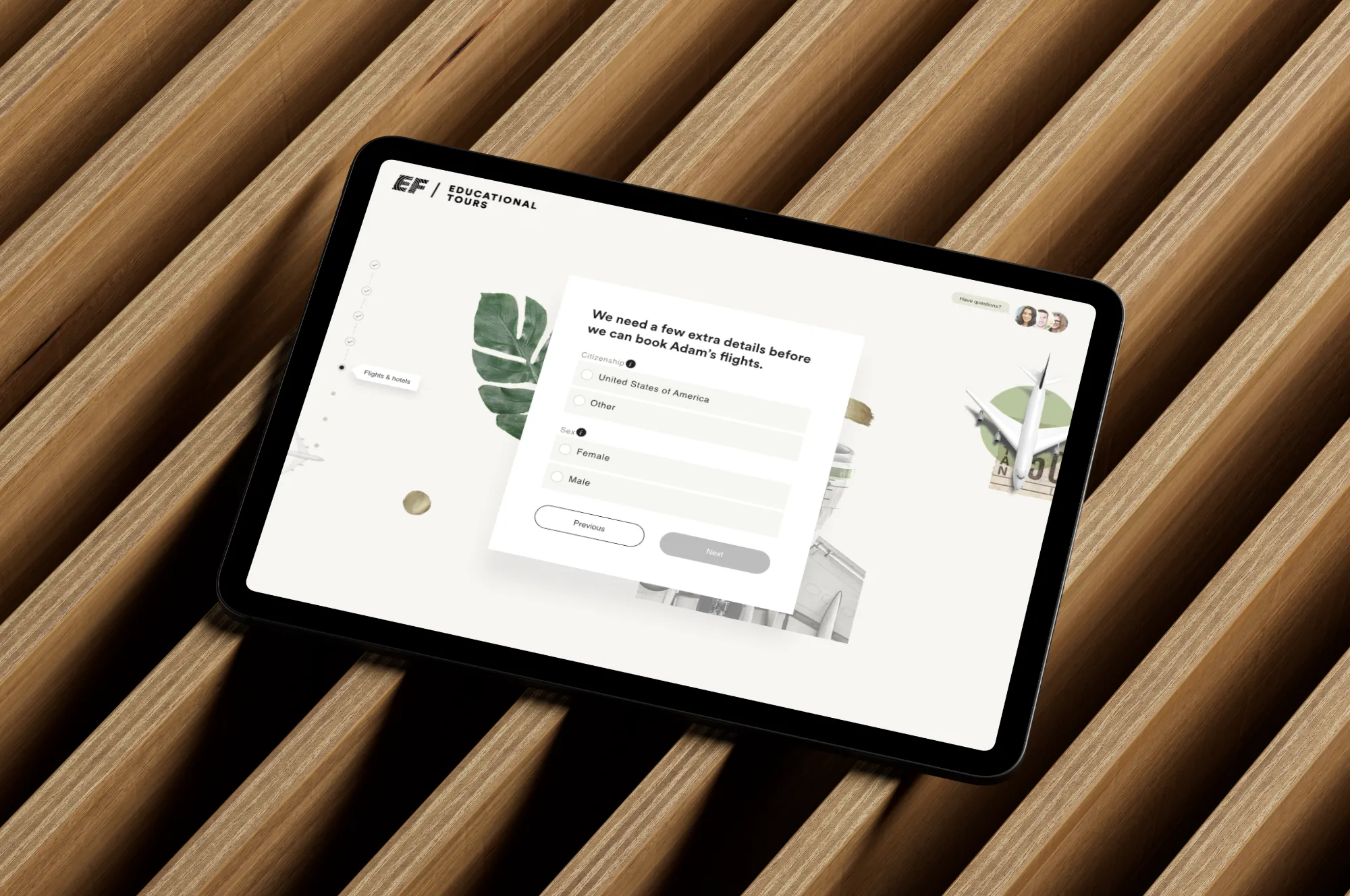
Tours enrollment
At EF, enrollment is when a parent commits to an experience that could change their child's life. Our job wasn't just to make the forms easier—it was to rethink how we show up for families in that moment. The old flow felt like paperwork: rigid, overwhelming, and disconnected from the excitement of what parents were actually doing. We needed something that would ease their nerves and help them feel confident about their decision.
As Product Designer, I led the complete redesign of Tour Enrollment, turning an administrative task into a journey that guides and supports families, balancing clarity with anticipation.
Role
Focus
How we defined success
We couldn't just measure completion rates and call it a win. We needed to know if people felt good about completing enrollment.
So we defined success around emotional clarity. Did users:
Know exactly where they were in the process and what was coming next?
Feel guided and supported, not just processed?
Trust that EF had their back?
Move forward with confidence instead of second-guessing themselves?
The metrics mattered—better step-through rates, lower abandonment. But what also mattered was whether families felt calm and clear, not anxious and confused.
Experience Strategy
We stopped thinking about enrollment as "form submission" and started thinking about it as "trip preparation." That shift changed everything.
Our guiding principles:
Show progress, not just requirements — Let people see how far they've come and how close they are to being done
Clarity builds trust — Use plain language, no jargon, no surprises
Design for two audiences — Parents need reassurance; students need excitement
Set the right pace and tone — Treat logistics like preparation for an adventure, not red tape
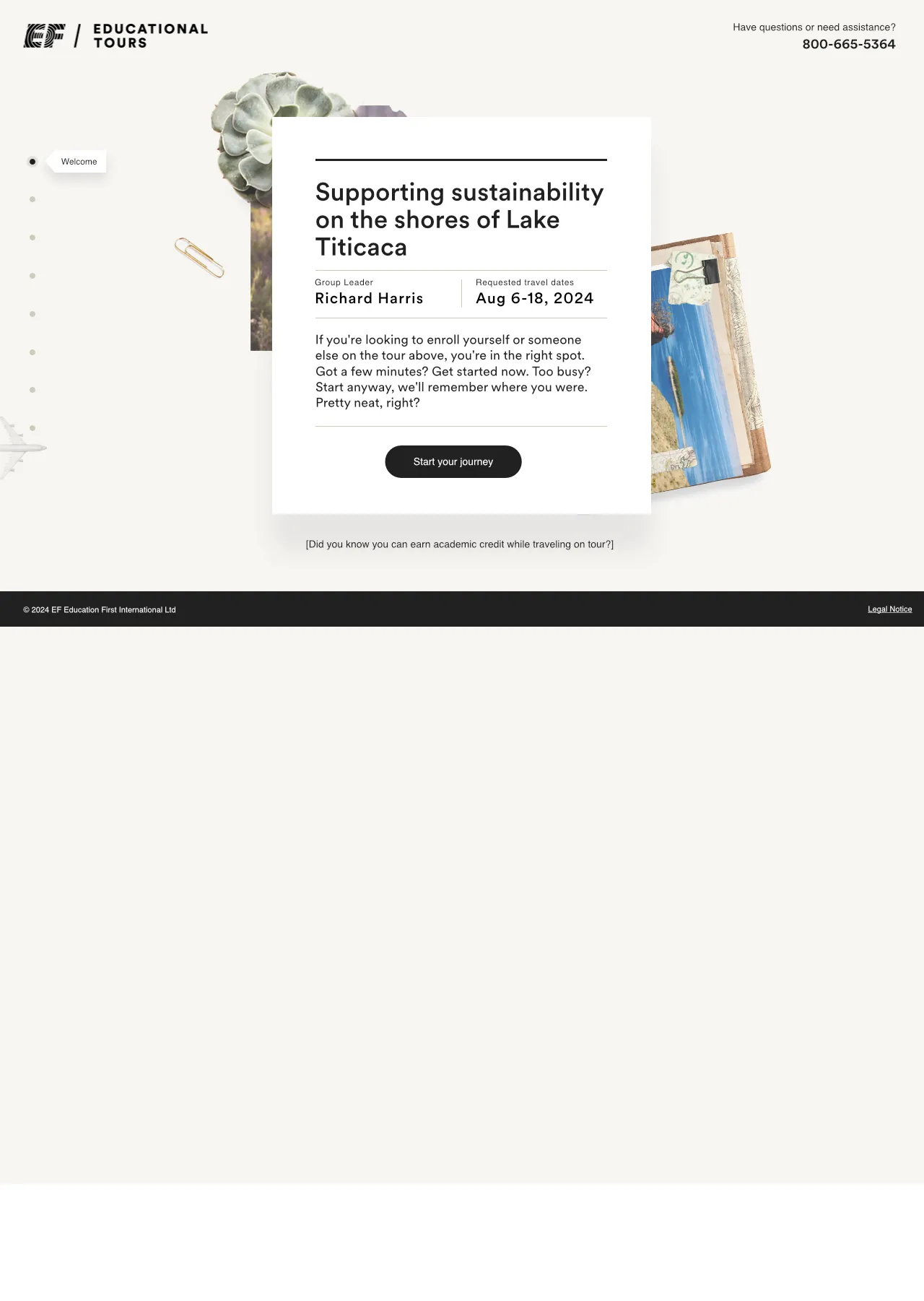
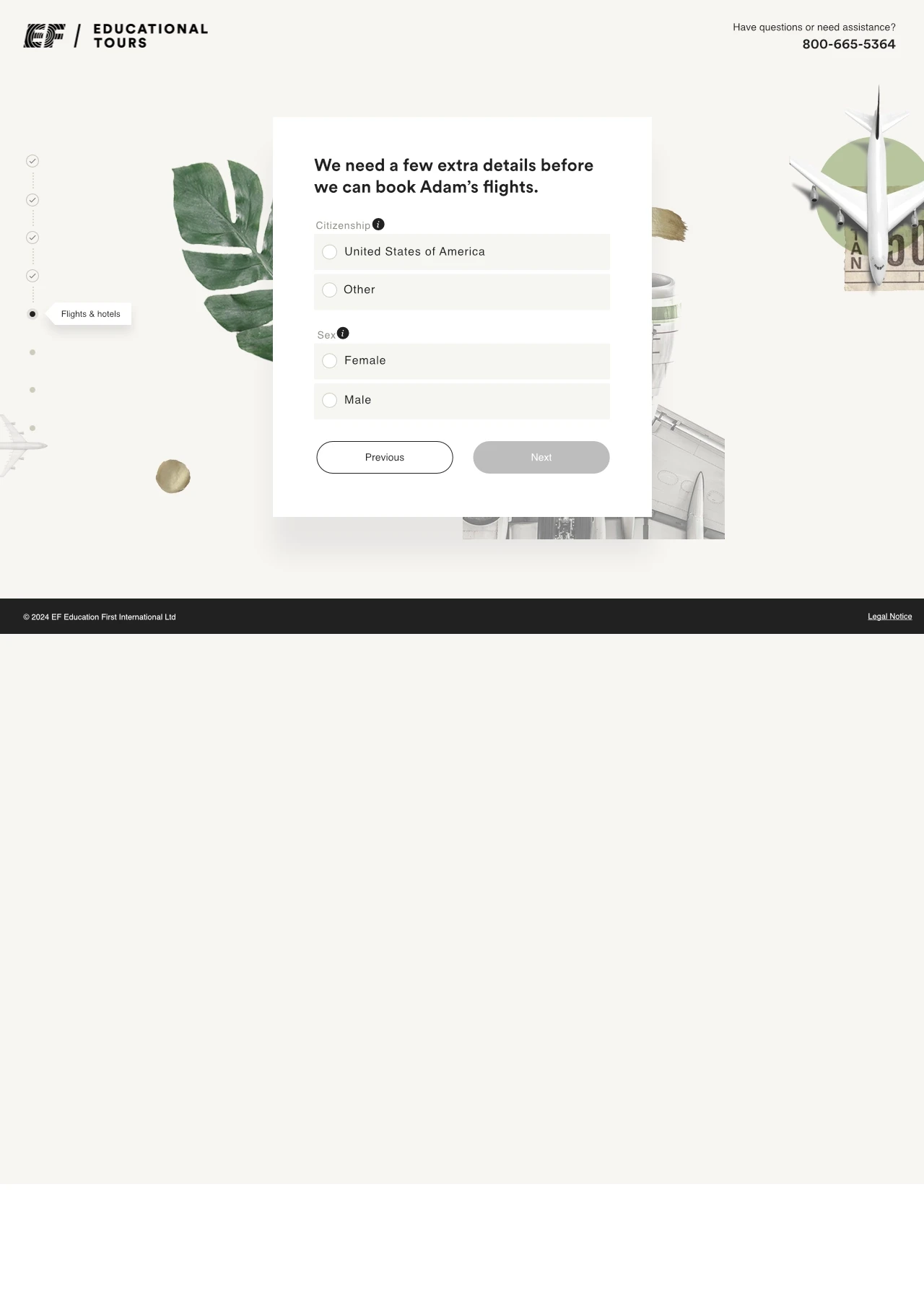
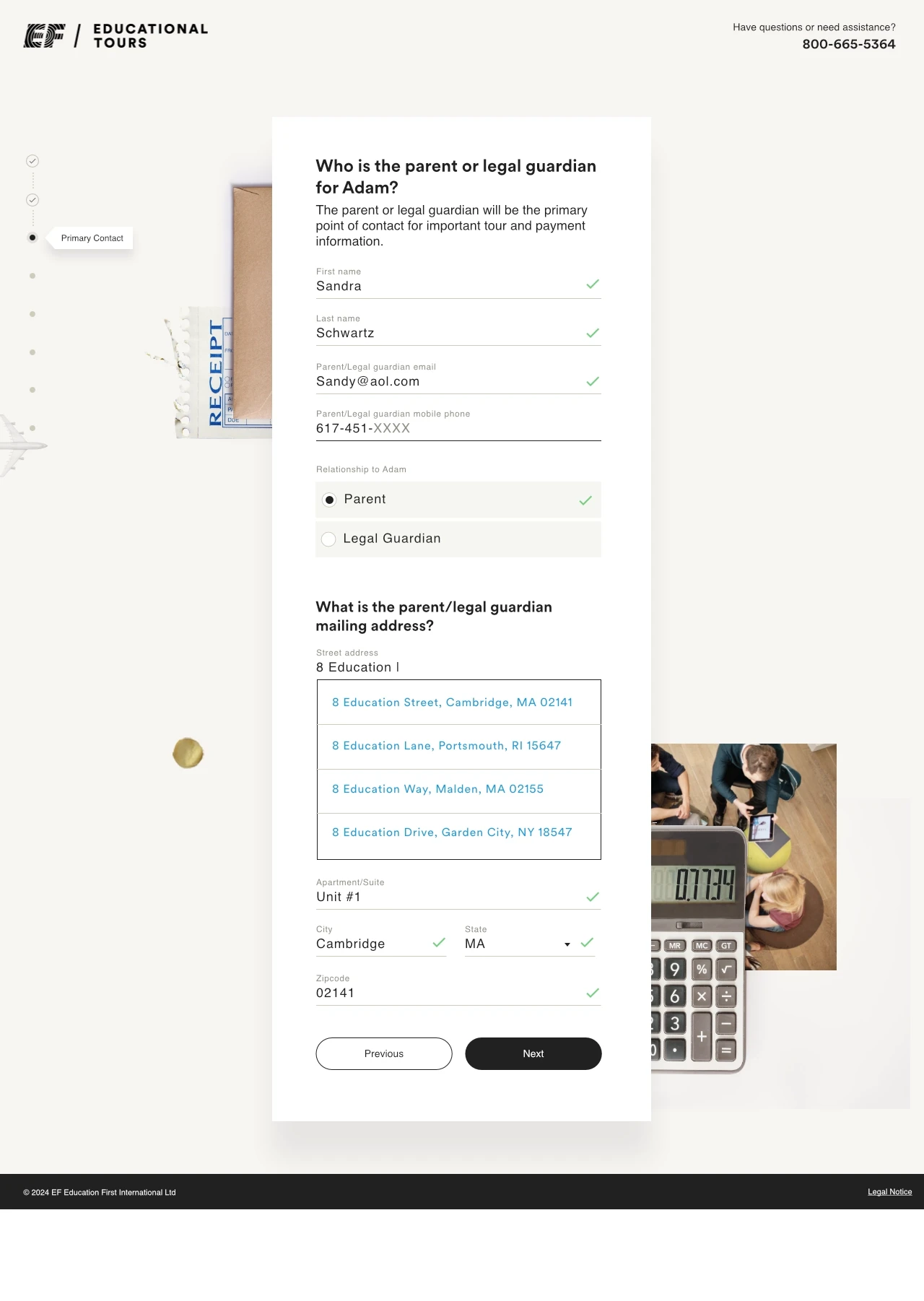
Visually, we moved away from dense forms and toward something that felt more like planning a trip. Card-based layouts. Breathing room. Photos that made you want to pack your bags. Small animations that gave you a sense of momentum—like you were actually getting somewhere.
Outcomes
The redesign shipped to a pilot group of families during open enrollment and showed measurable improvement across every metric we tracked.
Enrollment completion rate increased 34% — more families who started the flow finished it, without a drop in data quality or an increase in support contacts
Step abandonment dropped 41% on the payment and insurance screens, historically the two highest exit points in the old flow
Customer Service call volume related to enrollment questions fell 28% in the first full cycle post-launch — families were finding answers in the flow instead of picking up the phone
Average time-to-complete decreased by 6 minutes, not because we cut steps, but because people weren't stopping to re-read or second-guess
The qualitative signal matched. Post-enrollment survey scores for "I felt confident about my decision" improved from 61% to 84% favorable.